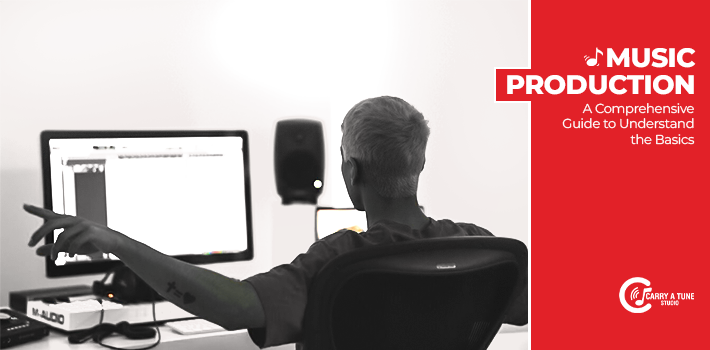
A professional recording studio beats a home setup because it combines acoustically treated rooms, high-end microphones and outboard gear, and experienced engineers, things a bedroom studio simply can't replicate. The result is a cleaner, more polished, more radio-ready sound, and often at a lower long-term cost than building out a home rig.
Home studios have come a long way. A decent audio interface, a condenser mic, and a laptop with the right plugins can get you surprisingly far these days. So why do most working musicians, composers, and labels still book time at a professional studio instead of just recording in their bedroom?
The honest answer: convenience and quality aren't the same thing. Home setups win on convenience. Professional studios win on quality, consistency, and the kind of sound that actually stands out in a crowded industry. If you're weighing recording at home against booking a studio, here's what actually separates the two, and why the difference shows up in the final track.

The core difference comes down to environment, equipment, and expertise. A home setup relies on whatever room you happen to have and gear you can personally afford. A professional studio is purpose-built: the room, the wiring, the microphones, and the engineers are all designed around getting the best possible take, every time.
Here's a closer look at the reasons this difference matters so much for your final recording.
1. The Control Room and Acoustic Environment
The room you record in shapes your sound more than most people realize. A professional recording studio is acoustically treated to eliminate unwanted echo, reflections, and outside noise, none of which your bedroom or living room was ever designed to handle. That clean, controlled environment is what lets your vocals and instruments come through exactly as they should, which makes it far easier to connect with listeners once the track is out.
2. Access to Quality Equipment
Your sound is only as good as the gear capturing it. Studio-grade equipment such as preamps, converters, and monitors is often priced well beyond what makes sense for a single home setup. Recording at a professional studio like Carry A Tune Studio gives you access to that top-tier gear without having to buy any of it yourself, which noticeably lifts the quality of your finished track.
3. Advanced Acoustics and Space
Beyond just soundproofing, professional studios are engineered specifically for music recording, with proper room dimensions, isolation booths, and space to comfortably record a full band or live drums. Even details like air conditioning and clean electrical wiring play a quiet but real role in recording quality, something a converted spare room can rarely match.
4. A Wide Range of Premium Microphones
One of the biggest perks of studio time is the mic locker. Professional studios carry a range of high-quality microphones, many of which cost more than an entire home studio setup, so you can pick the exact mic that suits your voice or instrument. Pair that with strong preamps and a treated room, and you've got a combination that's genuinely hard to recreate at home.
5. A Serious Selection of Outboard Gear
You might own a few solid plugins at home, but nothing quite matches what a well-equipped mixing recording studio can offer: hardware compressors, EQs, and effects processors that shape a track in ways software alone often can't. That gear is usually what separates a "good enough" mix from a genuinely polished one.
6. A Focused, Distraction-Free Recording Experience
A studio session means one thing: recording, without the doorbell, the dog, or a dropped Wi-Fi connection interrupting your take. Whether your project takes a few hours or a few weeks, everything stays properly configured and ready to go, with a team on hand to keep the session running smoothly. Many studios also handle post-production, including mixing, mastering, even CD duplication and artwork, so the entire project moves under one roof instead of getting pieced together across different tools and people.
7. Expert Guidance When You Need It
A home setup only gets you as far as your own technical know-how. In a studio, you're working alongside engineers who record, mix, and master for a living, people who can catch a problem before it ends up baked into your final track. That kind of guidance is hard to put a price on, especially if music production isn't your day job.
8. More Room for Creative and Musical Innovation
When you're not busy troubleshooting mic placement or chasing a hum in your recording, you can actually focus on the music. Letting engineers handle the technical side frees you up to experiment and create, and that shift alone often leads to a better performance and a more interesting final product.
9. Cost Efficiency in the Long Run
Studio time can feel like a bigger expense upfront, but building a home studio that can genuinely compete, complete with a treated room, quality mics, and solid outboard gear, adds up fast, and it's a one-time cost you're stuck with even if your needs change. A professional studio gives you top-tier equipment and experienced engineers for the length of your project, often for less than what a comparable home setup would cost to build.

| Factor | Home Studio | Professional Studio |
|---|---|---|
| Acoustic treatment | Limited or none | Purpose-built for recording |
| Equipment | Budget to mid-range | High-end, industry-standard |
| Microphone options | 1-2 mics, usually | Full mic locker to choose from |
| Engineer support | Self-taught / DIY | Experienced, dedicated engineers |
| Post-production | Often separate/DIY | Mixing, mastering, and more, in-house |
| Upfront cost | Ongoing gear investment | Pay per project/session |
This is usually the first question artists ask, and it's a fair one. Studio rates vary depending on location, the engineer's experience, and what's included, some sessions are billed hourly, while others are priced per song or per project, covering recording, mixing, and sometimes mastering together.
Here's the part people often miss: the real comparison isn't "studio cost vs zero cost." It's studio cost vs the cost of building a home setup that can genuinely compete, a treated room, a solid interface, a couple of good mics, monitors, and enough plugins to mix properly. That adds up quickly, and it's money spent whether you finish one song or ten. Studio time, on the other hand, scales with your actual output, which is why so many independent artists find it more cost-effective over a full project or album.
If you're releasing music commercially, pitching to labels, scoring for film or ads, or simply want your track to sound as good as the songs you admire, a professional studio is worth the investment. A home setup still works well for demos, practice recordings, or early songwriting, but when the final product needs to compete in today's market, the gap in quality becomes hard to ignore.
This is also where working with a full-service partner helps. Beyond recording, a good studio can support the entire creative journey, from a proper music composition service that builds your track from the ground up to a fully finished song.
It also helps to have a partner who can support you beyond just the studio session. For artists who need flexibility without compromising on quality, online music production gives you that same professional standard, wherever you're creating from.

Booking a professional studio is only half the equation, how you prepare for the session affects your results just as much. A few things that genuinely make a difference:
Final Thoughts
Home studios are great for writing, practicing, and getting ideas down quickly. But when it's time to record something you're actually putting out into the world, a professional recording studio brings a level of sound quality, expertise, and polish that's genuinely hard to match at home. If you're deciding between the two for your next project, it's worth reading our detailed breakdown on pro music studio for a closer look at the trade-offs.
At Carry A Tune Studio, we handle everything from recording and mixing to mastering and composition, so your music gets the treatment it deserves, start to finish.
Preparing your music for professional mixing involves more than simply exporting audio files from your digital audio workstation (DAW). The way you organize, export, and deliver your tracks can significantly influence the mixing process and the quality of the final production. One of the most important concepts to understand before sending your project to a mixing engineer is audio stems.As an independent artist, singer, songwriter, composer, or [...]
A polished song does not begin with mixing and mastering. It begins the moment you press the record button.For independent artists, singers, musicians, and creators, recording at home or in a small project studio has become more accessible than ever. A good microphone, an audio interface, headphones, and a digital audio workstation can give you everything you need to start creating music. But having the equipment is only one part of the pr [...]
Creating one great song is exciting. Creating an entire album is a much bigger undertaking. An album brings together multiple songs, arrangements, vocals, instruments, mixes, and creative ideas that need to feel connected while still allowing every track to have its own identity.From modern cinematic scoring to the future of film audio production, creating an entire album is a massive undertaking that goes far beyond producing a single song.This [...]
A professional-sounding song starts long before the mixing engineer opens the project. Proper preparation gives your engineer clean audio, organized stems, enough headroom, and a clear understanding of your creative direction.Regardless of if you are producing pop, hip-hop, or one of the top 10 genres in the Indian music industry, a professional-sounding song starts long before the mixing engineer opens the project.Preparing a song for mixing and [...]
Professional Online Mixing and Mastering Services Explained If you're planning to release your music professionally, understanding the difference between Mixing Online, Mixing and Mastering, and Online Mixing and Mastering is essential. Although these terms are often used interchangeably, they represent two distinct stages of music production that work together to create a polished, release-ready track. Mixing Online focuses on balancing and enha [...]
Music is much more than melody and lyrics. Behind every memorable song is a carefully crafted arrangement that shapes its mood, energy, and emotional impact. Whether it's a chart-topping Bollywood track, a soulful devotional bhajan, an independent release, or a cinematic soundtrack, the arrangement is what transforms a simple musical idea into a compelling listening experience. In today's highly competitive music industry, listeners expect songs [...]
Modern audio production demands a balance between creativity, technical precision, and efficiency. Producers are often required to manage recording, sound design, arrangement, mixing, and mastering within increasingly tight timelines. In such an environment, workflow optimization becomes essential. One of the most effective tools for improving productivity in music production is the use of audio presets. Audio presets provide pre-configured sett [...]
When people watch a film or video, the first thing they usually notice is the visuals. However, audio is what gives the visuals emotional meaning and depth. From subtle ambient sounds to dramatic cinematic effects, sound shapes the viewer’s experience and determines how engaging a story feels. Professional film audio production ensures that every sound element, dialogue, background ambience, music, and sound effects work together seamlessly. Wit [...]
In today’s dynamic music production landscape, simply achieving a clean recording or a polished plugin chain is no longer sufficient. Even the most technically sound track, whether mixed by an artist at home or through professional audio mixing services, can feel static and uninspired without movement and variation. This is where mix automation becomes essential. At Carry a Tune, a platform dedicated to professional online music productio [...]
Mastering is the final, critical stage in the music production process where the tonal balance, stereo imaging, and overall loudness of a track are refined to translate well across diverse playback systems. Of all the facets a mastering engineer considers, two of the most vital and often opposing elements are loudness and dynamics. Loudness gives a track presence and impact; dynamics preserve its nuance, expressiveness, and emotional depth. Stri [...]
When a listener hits play on an album, they’re expecting an experience that’s sonically cohesive, emotionally impactful, and professionally polished. While songwriting, arrangement, recording, and mixing form the foundation of any great album, it's the mastering process that ties everything together. Think of it as the final brushstroke on a painting subtle, but essential. Mastering an album is more than just making tracks louder; it’s about pre [...]
The right virtual studio technology (VST) plugins can make all the difference in music production. The best part? You don’t have to spend a fortune to get high-quality sounds. In 2025, these free VSTs are dominate the industry, offering unparalleled sound design, effects, and utility. Whether you're a producer, composer, or audio engineer, these plugins can elevate your work. Let’s break down the best of the best. The Best Free VSTs: Breaking Th [...]
If you've ever dabbled in audio production, engineering, telecommunications, or even physics, you might have encountered dB (decibels) and meters. At first glance, they seem like two unrelated concepts one measures intensity, the other measures distance. But in reality, they play a crucial role together in many technical applications. Let’s break them down, understand their significance, and explore how they relate. What is dB (Decibels) A decib [...]
Audio effects are crucial in modern music production, transforming raw recordings into polished masterpieces. They allow producers to shape sounds, enhance textures, and create immersive listening experiences. Understanding the various types of audio effects and their applications is essential for any music producer or audio engineer. Below is an in-depth guide to essential audio effects, their purposes, and best practices for using them. [...]
Achieving a polished, professional mix is one of the goals of any audio engineer or music producer. Compression is essential for balancing audio dynamics, controlling peaks, and enhancing sound cohesion. A good compressor can add punch to drums, smoothness to vocals, and glue to the entire mix. But, it requires careful attention to detail to avoid “squashing” or losing natural dynamics. This blog will explore the fundamentals of audio compressio [...]
A great song does not come together through melody alone. Once the core idea, lyrics, and composition are ready, music arrangement determines how that idea develops into a complete listening experience. The choice of instruments, rhythm, harmonies, dynamics, transitions, textures, and structure can completely change how a song feels.A strong arrangement supports the vocalist, builds emotion, creates movement between sections, and keeps listeners [...]
Reverberation occurs when sound waves are produced in a room and reflect off surfaces in all directions. These reflections decrease in amplitude until they eventually fade away. In most rooms without extensive sound insulation, many closely-spaced reflections reach the listener shortly after the direct sound. We perceive this series of reflections as a continuous, single sound known as "reverberation." Understanding the type of music you' [...]
Mixing and mastering are two crucial yet distinct stages in the music production process, each playing a vital role in crafting a polished, professional final product. Understanding the differences between these two stages is essential for anyone involved in music production, from beginners to seasoned professionals. What is Mixing Mixing is the process that occurs after individual tracks have been recorded. It involves adjusting and co [...]
Backing up your music compositions is an essential step in ensuring that your hard work and creativity are preserved and protected. As a music composer, losing even a single file can be a nightmare, but with the right strategies in place, you can avoid this potential disaster. Key Backup Strategies for Music Composers: The 3-2-1 Method: Three Copies: Always have at least three copies of your files. This includes the original and two b [...]
When it comes to music production, mixing and mastering are crucial steps that can transform a track from good to great. Whether you're an independent artist, a band, or a content creator, having your music handled by a professional mixing and mastering service ensures that it sounds polished and ready for distribution. But how much should you actually pay for this kind of service? Let's break down the costs, what factors influence pricing, an [...]
Music enthusiasts, singers, and performers often come across the term “minus one tracks.” These tracks play a significant role in music performances, practice, and production. Whether you're an aspiring artist or a seasoned performer, minus one tracks can enhance your musical journey. Let’s explore in detail what minus one tracks are, their benefits, and the various scenarios where they prove indispensable. What Are Minus One Tracks? Minus one t [...]
Music production has undergone significant changes in recent years, yet the collaborative effort behind creating great music remains essential. The process involves multiple roles, each contributing uniquely to the final outcome. From the initial idea to the final product, every individual involved whether a songwriter, music composer, music producer, or instrumentalist plays a crucial role in shaping the music. The Importance of the Song Idea T [...]
Essential Guide to Choosing the Right Computer for Music Production Music production is a complex and dynamic process requiring both creativity and technical expertise. The journey begins with brainstorming ideas, writing lyrics, and arranging melodies, culminating in the final stages of mixing and mastering. A quality computer setup is crucial in bringing these creative visions to life, providing the power needed to run music software smo [...]
Mastering the Art of Mixing and Mastering: A Guide to Perfecting Your Music Creating catchy music involves surpassing several levels of refinement. For music to be considered good, it needs to capture the listener's attention and resonate with their interests. Mixing and mastering are essential processes that significantly influence how a track is perceived. Sound engineers, with their deep understanding of technical nuances, play a cruci [...]
The Art of Mixing and Mastering: Creating Unforgettable Music A great song instantly grabs your attention, makes you groove, and compels you to sing along. While it’s easy to critique or praise a track, crafting one requires immense effort and precision. Achieving the perfect balance through mixing and mastering is key to making a track truly unforgettable. What is Mixing? Songs are all about the vibes they create. You judge a song base [...]
Music arrangement is arguably the most crucial aspect of any song ever created. While composing music is important, the arrangement process is equally vital as it transforms individual melodic parts into a cohesive, smooth-sounding track. Despite its importance, many artists struggle with or avoid the arrangement process altogether. When done correctly, the arrangement can turn your song into a hit, but when mishandled, it can leave you with a d [...]
Overcoming Challenges in Songwriting: Tips for Composing Memorable Music Composing a song with exceptional melodies and creative lyrics can be challenging, even for the most experienced songwriters. One of the key obstacles that many lyricists face is: Writer’s Block! This common issue can strike any songwriter, whether you’re crafting your first song or your hundredth. As you begin writing, countless questions flood your mind, with the mo [...]
Music arrangement is one of the most challenging tasks when creating a compelling piece of music. Arranging a song means organizing various musical elements into a cohesive, enjoyable track. Despite its importance, many artists find the process tedious and sometimes try to avoid it. To help you navigate this crucial aspect of music creation, we've put together some simple tips to transform your song's individual elements into a flawless track. T [...]
The Need for a Music Producer Every artist needs a pair of objective ears someone well-trained to understand and transform raw musical ideas into great, marketable music. Hiring a music producer provides that reliable support, especially if you’re a song composer or music creator. While you focus on your creative skills, a producer can offer an unbiased perspective on your music, telling you exactly what works and what doesn’t. Because you’ [...]
Mixing and mastering are crucial processes that enhance and perfect your music tracks. Though these two processes are distinct, they are equally important for songwriters and audio producers. To simplify, mixing is performed before mastering and involves adjusting and combining individual tracks to create a cohesive stereo audio file. Once the stereo file is ready, the mastering process polishes it, ensuring each song on an album sounds coh [...]
Struggling to get studio-quality punch? While learning the difference between mixing and mastering is great, hiring online mixing and mastering services ensures your track meets Spotify & Apple Music standards.Even experienced professionals can find themselves confused by the technical jargon and complexities involved in mixing and mastering. Outside of the engineers themselves, few people truly understand what happens during th [...]
Mixing engineers put in countless hours, working day and night to perfect session files before they are sent off for mastering. Mixing and mastering are intricate tasks that require careful attention, as they can either elevate or undermine your track. For beginners embarking on their mixing journey, it’s crucial to be aware of common pitfalls that could lead to costly mistakes down the line. Here are five mistakes that beginners are most l [...]
Getting perfect mixing and mastering done professionally can be a tedious process. While online song mixers might seem convenient, they often introduce unwanted noises into your tracks. To achieve the best results, it's always recommended to hire a mastering engineer who can deliver a polished and professional sound. However, before you send your tracks for professional mixing, it's crucial to prepare them properly. Remember, the engineer i [...]
Ever wondered how the quality of the audio we listen to is transformed, or what exactly mixing and mastering are? For most people, these terms might sound the same, but for an engineer involved in the online music mixing and mastering industry, the differences are crucial and well-defined. Let’s delve into the audio mixing and mastering process and explore their differences in detail: What is Mixing? In simple terms, mixing is the pro [...]
Many people dream of becoming home studio enthusiasts, especially with all the modern recording technologies and equipment available today. It’s not only fun and exciting to create your own beats from your computer, but it's also incredibly empowering. However, even with all these tools at your fingertips, achieving a professional-quality sound can be challenging, and sometimes, the final product just doesn’t have that polished edge. Whil [...]
Many of us may not fully understand what mastering a track truly entails. If you’re new to the concept of “mastering,” you might be unsure or even skeptical about how significantly this technique can transform the sound of a song. Mastering is more than just making a song louder, fuller, or more polished; it’s about addressing the nuances in a mix that enhance the song from a creative and technical perspective. The Art of Mastering Mast [...]
Music mixing service – This is probably only one sure way to know that your song is sonically good. A great mix significantly interprets and accents the message of a song. No doubt, the music, and lyrics of the song send the strongest signals when people listen to it, but mixing technique aids in creating a vibe and emphasize particular elements for a song. In practicality, mastering isn’t going to make an amateur or bad sounding mix become [...]

#1 Online Choice for Independent Artists Worldwide

SUCCESS RATE

SATISFIED CLIENTS

CERTIFIED MUSICIANS

REPEAT CUSTOMER

PROJECTS DELIVERED

YEARS IN BUSINESS


 INR
INR USD
USD